Verified planning note
10x10 Trade Show Booths in Las Vegas, NV planning realities
- Representative venue: Las Vegas Convention Center
- Representative venue: the Venetian Expo
- Representative venue: Caesars Forum Conference Center
Booth Types
A 10x10 trade show booth is the most rented inline footprint in Las Vegas, and the right build depends on which hall you land in and how much help your team can give it during show week.
Verified planning note
Verified planning note
Representative venue: Las Vegas Convention Center
Representative venue: the Venetian Expo
Representative venue: Caesars Forum Conference Center
Related district: Convention Center District
Related district: Strip Central
Venue cluster: Strip South
Decision driver: corner vs. midrow inline position
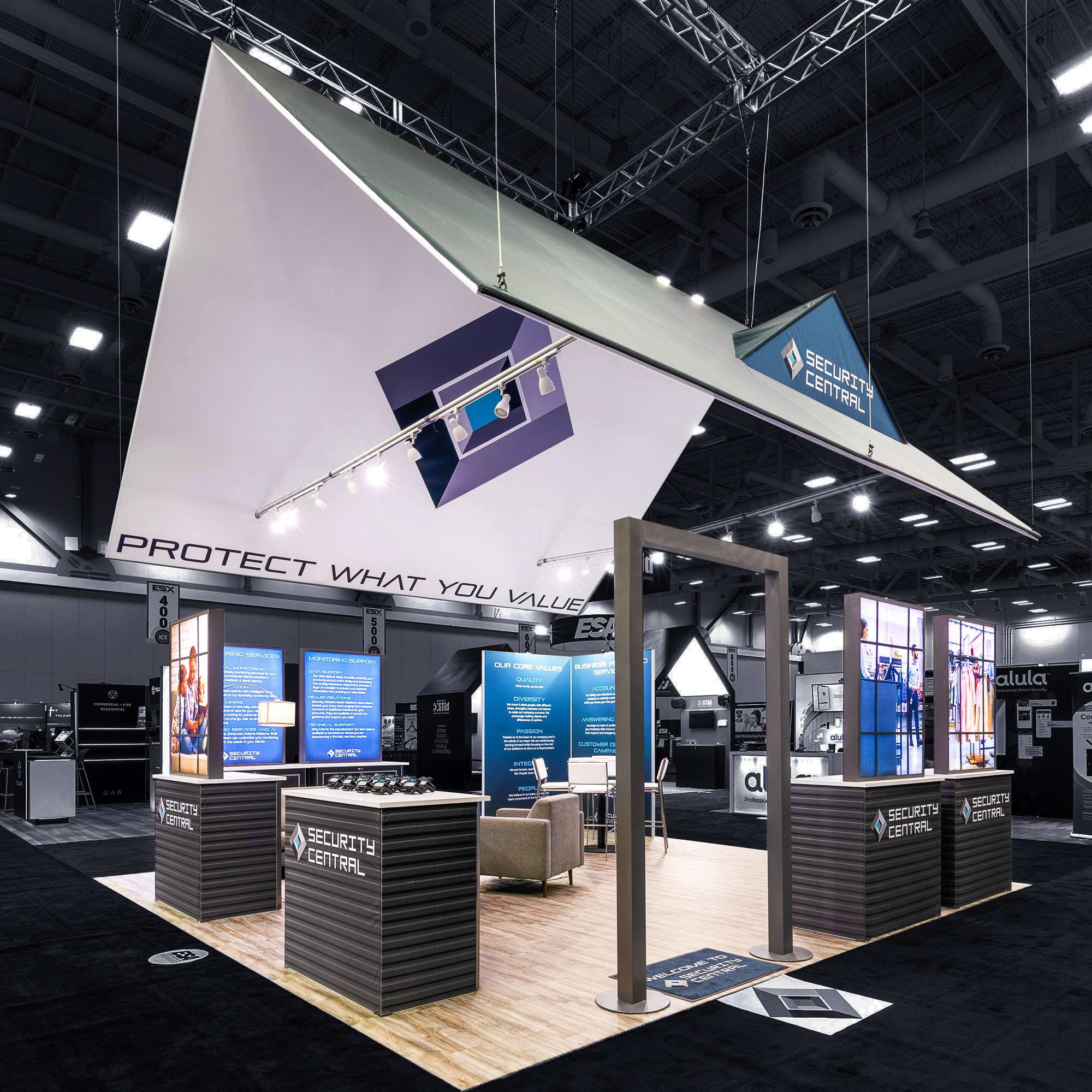
Most first-time and returning exhibitors in Las Vegas start with a 10x10 because it fits almost any floor plan and keeps freight, labor, and drayage manageable. The footprint is small enough to ship as a portable or modular kit, which matters when a show like the ones at the Las Vegas Convention Center can move thousands of booths through the same docks in a few days.
The trade-off is that a 10x10 has one job: get noticed in a crowded aisle and start a conversation fast. With only about 100 square feet, every inch of the back wall, the counter, and the overhead sign has to earn its place. A clean message and strong lighting usually beat a cluttered build that tries to say everything at once.
Whether the booth sits at the Venetian Expo, Caesars Forum, or a resort ballroom at Horseshoe, the goal is the same: make the space feel intentional, easy to staff, and quick to set so the crew is not still working when doors open.
A 10x10 on a corner gets two open aisles and behaves almost like a small peninsula; a midrow 10x10 is open on one side and competes with neighbors left and right. That single fact should drive the design before any graphics are ordered.
Corner spots reward an open, two-sided layout and a counter pulled toward the intersection. Midrow spots usually do better with a strong back wall, a tighter footprint for product, and lighting aimed to pull eyes from down the aisle. The Las Vegas Convention Center and the Venetian Expo both sell plenty of inline corners, so confirming your booth number early changes what we recommend.
Hanging signs are another variable. Some Las Vegas halls allow overhead signage above a 10x10 and some do not, so rigging and height limits should be checked against the specific building before a sign is built.
For one 10x10 in Las Vegas, renting the structure and shipping only graphics is often the cleaner play. It removes long-haul freight, cuts storage, and lets the kit be reconfigured if next year's booth number or hall changes.
Owning makes more sense when the same 10x10 travels to several shows a year and the exhibitor wants a fixed look. Even then, many programs keep the heavy structure as a rental and own only the soft graphics and counters, which protects the budget against damage and refresh cycles.
Because Las Vegas hosts repeat annual events across the Convention Center District and the Strip, reuse planning is worth settling early. A booth that is easy to store and re-skin pays off over a multi-year run.
The 10x10 keeps material handling light, but Las Vegas drayage is billed by weight and timing, so a heavy crate that misses its target move-in window can cost more than the booth saved. Packing to a known weight and labeling for the right marshalling yard keeps the number predictable.
Move-in at the larger halls is staged in waves. A small inline usually installs quickly once it reaches the space, so the bigger risk is freight sitting in the yard, not the install itself. Confirming the carrier, the advance-warehouse cutoff, and the show's drayage contractor early removes most of that risk.
If the booth is portable enough to hand-carry or move on a single cart, some resort-ballroom shows off the Strip allow simpler load-in, which can save a labor call entirely.
The most useful brief for a 10x10 names the show and venue, the booth number if assigned, whether the space is a corner or midrow, and the single outcome the booth needs to drive, usually lead capture or a quick product demo.
Sharing last year's photos, the exhibitor kit, or a rough product list lets us recommend a layout that staff can actually work without crowding the aisle. Even a partial packet tells us whether the build leans portable, modular, or a light custom rental.
That detail keeps the plan tied to the real room rather than a generic 100-square-foot template, which is what separates a 10x10 that works the floor from one that just fills the space.
Show name, venue, and booth number if assigned
Corner or midrow inline position
Primary goal: lead capture, demo, or brand presence
Existing graphics, counters, or prior-show photos
Next step
Share the show, venue, and booth number so the 10x10 recommendation matches the actual aisle, freight window, and goal in Las Vegas.