Verified planning note
Backlit & LED Displays in Las Vegas, NV planning realities
- Representative venue: Las Vegas Convention Center
- Representative venue: the Venetian Expo
- Representative venue: Wynn Las Vegas
Booth Types
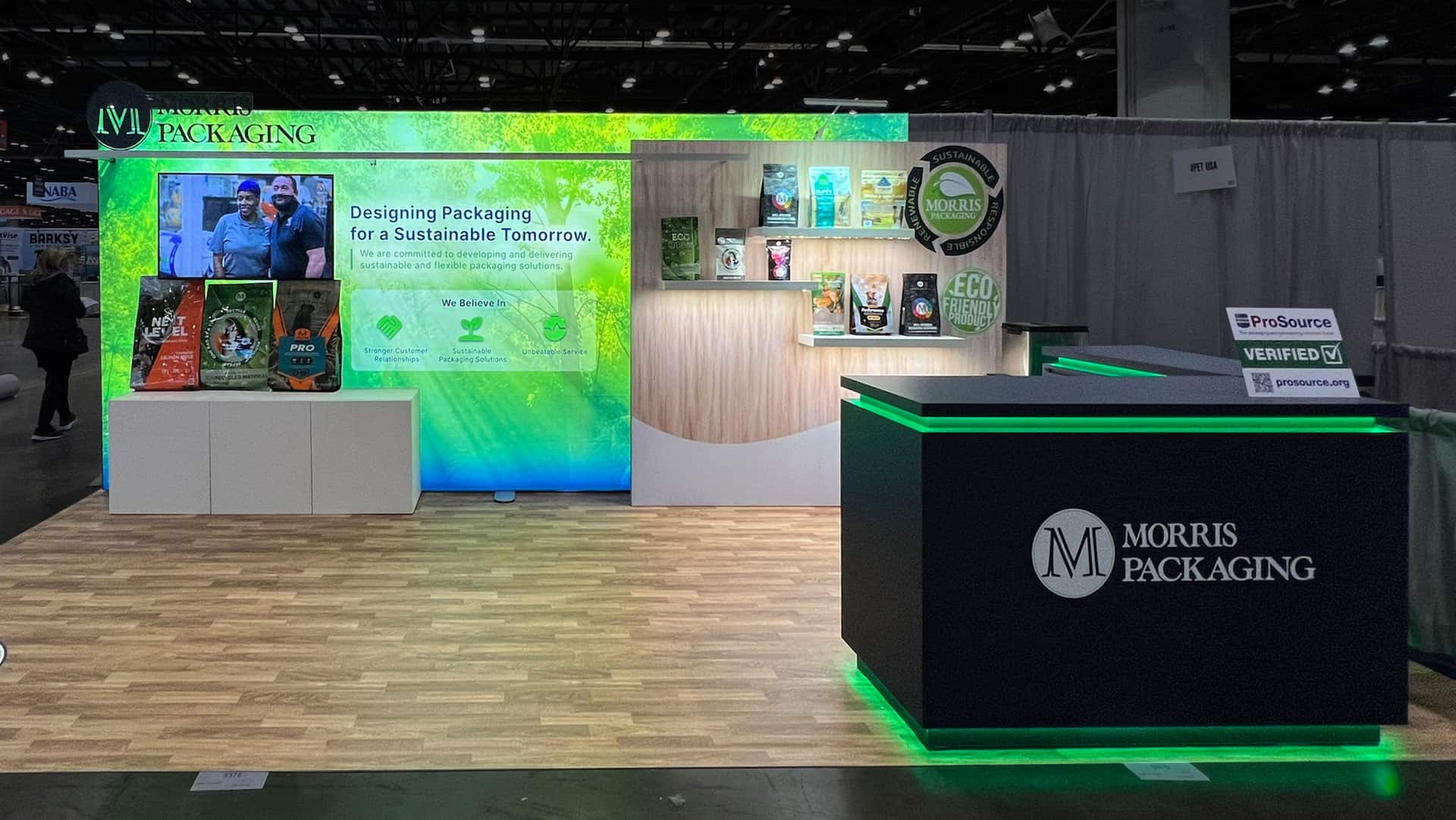
Backlit and LED displays are how a booth competes for attention on a Las Vegas show floor, where ambient lighting, big rooms, and louder neighbors can flatten a printed graphic that is not lit.
Verified planning note
Verified planning note
Representative venue: Las Vegas Convention Center
Representative venue: the Venetian Expo
Representative venue: Wynn Las Vegas
Related district: Convention Center District
Related district: Strip North
Decision driver: SEG light box vs. LED video wall
Planning input: power load and rigging approval
A backlit SEG light box is a tensioned fabric graphic in an extruded frame, lit from the edges or back so the image glows. It is lightweight, packs flat, and gives a premium, even glow that lifts a brand wall without any moving parts. For most Las Vegas booths, it is the simplest way to look more expensive than the budget.
An LED video wall is built from tiles and plays motion: product loops, live data, social feeds, or branded animation. It commands attention from across a hall, which is why it shows up on larger islands and at marquee shows, but it carries more weight, more power, and more technical support than a light box.
Many Las Vegas booths combine the two: a glowing SEG back wall for the brand and a smaller LED panel for the demo or hero loop. That mix keeps cost and complexity in check while still giving the booth movement where it counts.
LED looks great until the room fights it. Under the bright, even lighting of a hall like the Las Vegas Convention Center, a wall needs enough brightness and the right pixel pitch to stay crisp at the viewing distance attendees actually stand. Too coarse a pitch viewed up close looks chunky; too fine a pitch from far away wastes budget.
Backlit light boxes are more forgiving, but they still benefit from a brightness that suits the venue. A subtle glow that flatters a graphic at Wynn or Bellagio may look underpowered in the open expanse of the Venetian Expo, so the lighting level should be matched to the setting.
The practical move is to set the viewing distance and the venue first, then pick the display. That order keeps the spend pointed at clarity instead of a headline number that the room undercuts.
LED walls draw real power and often hang or stack, which brings the show's electrical and rigging contractors into the plan. In Las Vegas, hanging anything overhead generally goes through the venue's approved rigging process, and power has to be ordered to the wall's actual load, not guessed.
Light boxes are lighter on both counts, usually plugging into standard booth power and free-standing without rigging. That makes them the lower-friction choice when a booth wants illumination without a technical production around it.
Because power, rigging, and labor rules differ by building, we confirm them against the specific hall, whether that is Mandalay Bay, the Venetian Expo, or a resort ballroom at Aria, before the display is locked. It avoids a wall that cannot be powered or hung where the design assumed.
Renting an LED wall in Las Vegas is common because the tiles, processing, and on-site tech can come as a package for the run of the show, which avoids owning gear that needs storage and updates between dates. Backlit light boxes rent easily too, with only the fabric graphic changing between shows.
Content is the part exhibitors underestimate. An LED wall needs files built to the wall's resolution and a loop that reads in a few seconds as attendees walk by. We scope the content format alongside the hardware so the wall is not dark or stretched on opening morning.
On show day, an LED wall usually wants a tech on call for the install and a check each morning. A light box rarely does. Matching the support level to the display keeps the booth running without surprises during a busy Las Vegas week.
A useful brief names the show and venue, whether you want a glowing brand wall, motion, or both, the rough wall size, and the viewing distance attendees will stand at. Those four inputs decide light box versus LED and the right pitch.
Sharing your content plan, any existing video or graphics, and the booth footprint lets us scope power, rigging, and the on-site tech realistically. If the wall hangs, the booth number and orientation matter for the rigging request.
With that detail the display is matched to the room and the message rather than a spec sheet, which is what keeps a Las Vegas booth bright and legible instead of washed out or over-built.
Show, venue, and booth footprint
Goal: glowing brand wall, motion content, or both
Approximate wall size and viewing distance
Existing video or graphic content, if any
Next step
Share the show, wall size, and viewing distance so the backlit or LED spec matches the actual room and content plan in Las Vegas.